
Aug 16, 2026Product Knowledge
How to Choose the Right Brake Disc for Your Vehicle: A Complete Buyers Guide
Learn how to choose the right brake disc for your vehicle. Compare solid vs vented discs, match by OE number, and find popular brake disc fitments for Toyota, Honda, BMW, Mercedes, Nissan, Hyundai, VW
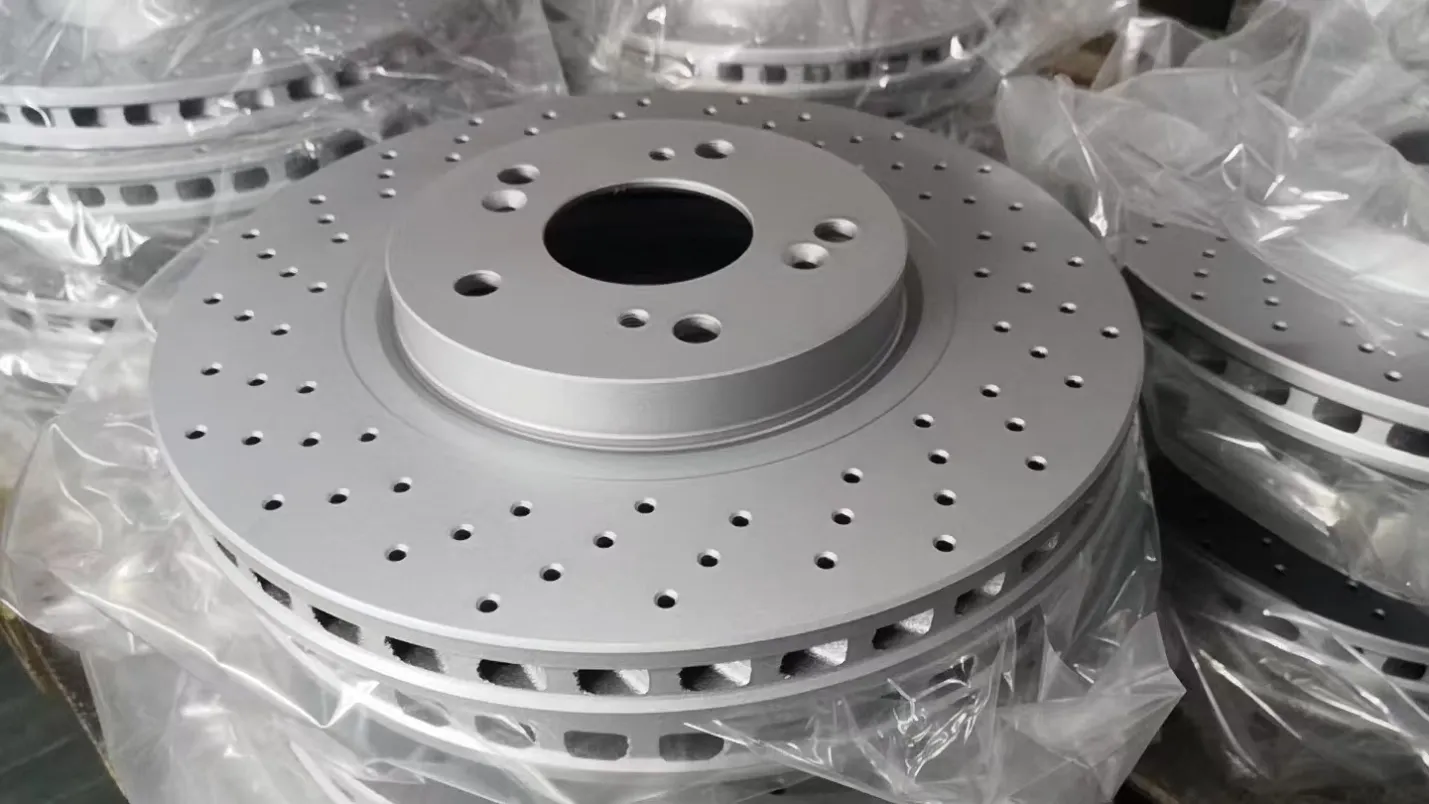
How to Choose the Right Brake Disc for Your Vehicle: A Complete Buyers Guide
Choosing the right brake disc is not just about finding one that fits. The wrong disc can cause vibration, uneven wear, and even brake failure. Whether you are a car owner replacing worn-out rotors or an auto parts buyer sourcing inventory, this guide will help you make the right choice.
What Is a Brake Disc and How Does It Work?
A brake disc (also called a rotor) is a metal component that rotates with the wheel. When you press the brake pedal, brake pads clamp onto the disc surface to create friction, slowing the vehicle down.
Because brake discs handle extreme heat and pressure, they wear down over time and need periodic replacement. Choosing a quality disc that matches your vehicle specifications is essential for safe driving.
Solid vs Vented Brake Discs: What's the Difference?
There are two main types of brake discs:
Solid brake discs are made from a single piece of metal. They are lighter and more affordable, making them suitable for rear axles and smaller vehicles that generate less braking heat.
Vented brake discs have a finned interior structure between two friction surfaces. The vents allow air to flow through, which helps dissipate heat more effectively. Vented discs are the standard choice for front axles and performance vehicles where braking loads are higher.
When sourcing brake discs, always check whether your application calls for solid or vented type. Using the wrong type can lead to overheating and reduced braking performance.
How to Find the Right Brake Disc for Your Vehicle
The most reliable way to match a brake disc is by OE number (Original Equipment number). This is the manufacturer's part number stamped on the original disc. Here's what to check:
OE number - The exact part number (e.g., 42431-60290 for Toyota Land Cruiser rear)
Position - Front or rear discs have different sizes
Outer diameter - Measured in millimeters across the disc
Thickness - The total width of the disc
Number of bolt holes - Must match your wheel hub
Center hole diameter - Must fit over the hub center
If you cannot find the OE number, knowing your vehicle's make, model, and year is the next best option. A reliable supplier can cross-reference this information to find the correct disc.
Popular Brake Discs by Vehicle Brand
Here are some of the most commonly replaced brake discs across popular vehicle brands:
Toyota
Toyota brake discs are among the most in-demand worldwide. Popular fitments include:
Brake Disc 42431-60290 - Toyota Land Cruiser Rear (vented, 345mm x 18mm) - View Product
Brake Disc 43512-52120 - Toyota Vios / C20R Front (solid, 257mm x 18mm) - View Product
Honda
Honda vehicles use both front and rear discs depending on the model:
Brake Disc 45251-T5GH00 - Honda Civic / City Front (vented, 282mm x 23mm) - View Product
Brake Disc 42510-SFY000 - Honda Spirior Rear (solid, 282mm x 9mm) - View Product
Brake Disc 45251-T2JH01 - Honda Odyssey / Spirior Front (vented, 293mm x 25mm) - View Product
Mercedes-Benz
Mercedes brake discs come in a wide range of sizes across different classes:
Brake Disc 2114230912 - Mercedes E-Class / CLS-Class Rear (vented, 300mm x 22mm) - View Product
Brake Disc 2044231512 - Mercedes C-Class / E-Class Rear (solid, 299.9mm x 10mm) - View Product
Brake Disc 1644230612 - Mercedes GL / ML Rear (vented, 330mm x 22mm) - View Product
BMW
BMW brake discs are engineered for performance driving:
Brake Disc 34216775287 - BMW 3 Series 335i / 4 Series 435i Rear (vented, 336mm x 22.4mm) - View Product
Brake Disc 34116792223 - BMW 1 Series 116i / 2 Series 220i Front (vented, 312mm x 24mm) - View Product
Nissan
Nissan disc brakes are widely used across sedans and SUVs:
Brake Disc 40206-JG00A - Nissan MX6 / S5 Front (vented, 295.8mm x 26mm) - View Product
Brake Disc 40206-VE800 - Nissan R50 Front (vented, 299.8mm x 28mm) - View Product
Hyundai and Kia
Hyundai and Kia share many platform components, so some discs are interchangeable:
Brake Disc 58411-2P000 - Hyundai Santa Fe / Kia Sorento Rear (solid, 302mm x 11mm) - View Product
Brake Disc 51712-2C000 - Hyundai K4 Front (vented, 300mm x 28mm) - View Product
Volkswagen and Audi
VW and Audi share platforms across many models:
Brake Disc 7L6615301E - VW Q7 / Cayenne Front (vented, 349.7mm x 34mm) - View Product
Brake Disc 8K0615601B - Audi A4 / A5 / A6 / Q5 Rear (solid, 299.9mm x 12mm) - View Product
When Should You Replace Brake Discs?
Replace your brake discs when:
1. Thickness is below the minimum specification - Every disc has a minimum thickness stamped on it. Once worn past this limit, the disc must be replaced.
2. Visible grooves or scoring - Deep lines on the disc surface reduce braking efficiency.
3. Vibration when braking - This often indicates the disc is warped or unevenly worn.
4. Cracks or heat spots - Discoloration or visible cracks mean the disc has been overheated and is no longer safe.
As a general rule, brake discs should be inspected every time brake pads are replaced. Many mechanics recommend replacing discs every 2nd or 3rd pad change, depending on driving conditions.
What to Look for When Buying Brake Discs in Bulk
If you are an auto parts importer or distributor, here are the key factors to consider:
Material quality - High-carbon cast iron provides better heat resistance and longer service life.
Precision machining - Discs must be balanced and have consistent thickness to prevent vibration.
Anti-corrosion coating - A protective coating helps prevent rust during storage and extends shelf life.
Proper packaging - Discs should be individually wrapped to prevent damage during shipping.
Certification - Look for suppliers with IATF 16949 quality management certification.
Need Help Finding the Right Brake Disc?
We carry a full range of brake discs for Toyota, Honda, Mercedes, BMW, Nissan, Hyundai, VW, Audi and more. All discs are manufactured under strict quality control with consistent dimensions and reliable performance.
If you are looking for a specific brake disc or need help choosing the right fitment for your market, feel free to reach out. Let us know the vehicle models and quantities you need, and we will provide detailed product information and pricing.