
Aug 21, 2026Product Knowledge
Drum Brakes vs Disc Brakes: What Is the Difference and Which One Is Better
Compare drum brakes and disc brakes. How they work, pros and cons, heat management, maintenance, and which vehicles use each type. Essential guide for auto parts buyers.
How Drum Brakes Work
A drum brake consists of a rotating drum attached to the wheel and a set of brake shoes inside the drum. When you press the brake pedal, hydraulic pressure pushes the brake shoes outward against the inner surface of the drum. The friction between the shoes and the drum slows the wheel down.
The main components of a drum brake system include:
- Brake drum — The rotating metal cylinder attached to the wheel
- Brake shoes — Curved friction pads that press against the drum
- Wheel cylinder — Hydraulic component that pushes the shoes outward
- Return springs — Pull the shoes back when the brake is released
- Adjuster mechanism — Maintains proper shoe-to-drum clearance as components wear
Drum brakes have been used in automobiles since the early 1900s. While they are less common on modern front axles, they are still widely used on rear axles, especially on compact cars, economy vehicles, and commercial trucks.
How Disc Brakes Work
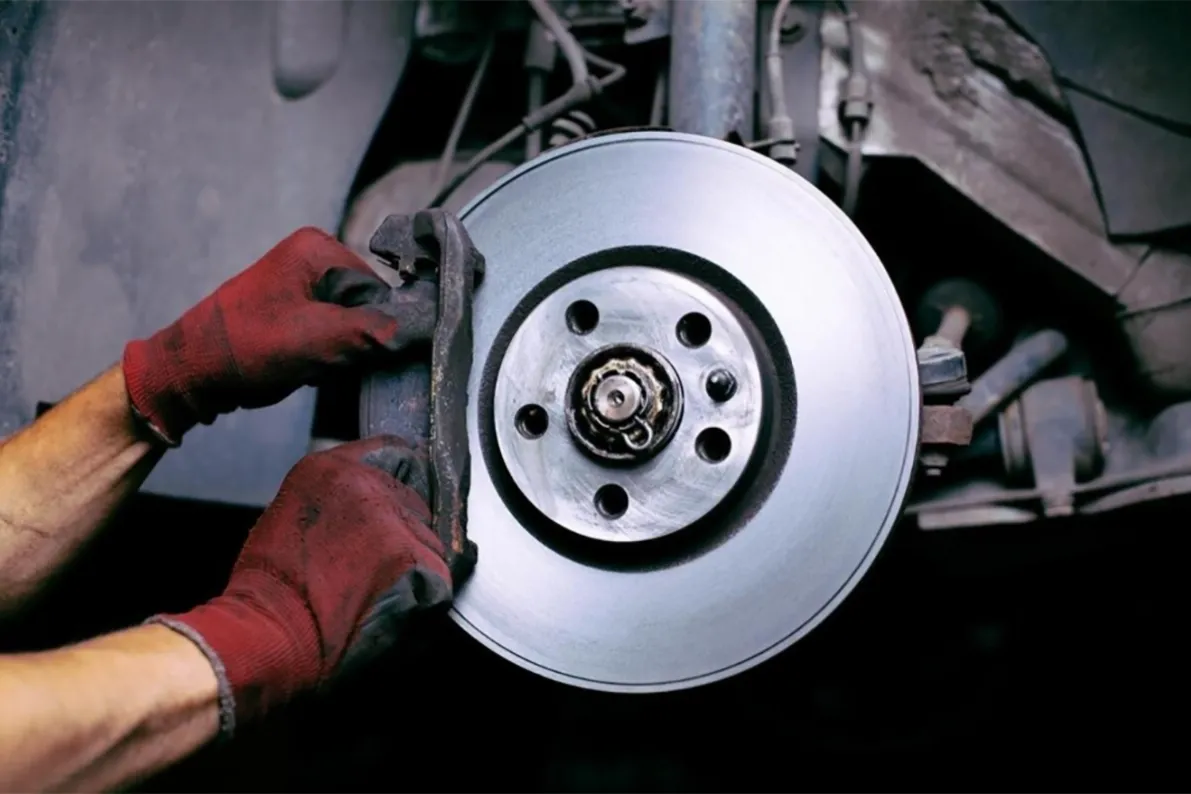
A disc brake uses a different approach. Instead of pressing outward against a drum, brake pads clamp inward against a flat, rotating brake disc (also called a rotor). The caliper houses the brake pads and uses hydraulic pressure to squeeze them against both sides of the disc.
The main components of a disc brake system include:
- Brake disc (rotor) — The flat, rotating metal disc attached to the wheel
- Brake pads — Friction material that clamps against the disc
- Brake caliper — Houses the pads and piston(s), straddles the disc
- Caliper bracket — Mounts the caliper to the steering knuckle or axle
- Brake hardware — Clips, shims, and slide pins that ensure smooth operation
Disc brakes became standard on front axles in the 1970s and 1980s because they handle heat better than drum brakes. Today, most passenger vehicles use disc brakes on all four wheels, though some economy models still use drum brakes on the rear.
If you are sourcing brake discs for your market, read our guide on how to choose the right brake disc for detailed specifications and fitment advice.
Drum Brakes vs Disc Brakes: Side-by-Side Comparison
Feature | Drum Brakes | Disc Brakes |
|---|---|---|
Heat dissipation | Poor — heat stays trapped inside the drum | Excellent — disc is exposed to air |
Brake fade | More prone to fade under heavy use | Resistant to fade |
Wet performance | Slower to dry, reduced braking when wet | Dries quickly, consistent wet performance |
Maintenance | More complex, harder to inspect | Simpler, easier to inspect and replace |
Self-cleaning | No — debris stays inside the drum | Yes — pads clean the disc surface |
Cost | Lower manufacturing cost | Slightly higher cost |
Weight | Heavier | Lighter |
Parking brake | Built-in mechanism, works well | Requires separate mechanism or integrated caliper |
Typical use | Rear axles, economy cars, trucks | Front axles, performance cars, all four wheels |
Advantages of Drum Brakes
Despite being older technology, drum brakes still have some practical advantages:
Lower Cost
Drum brakes are cheaper to manufacture than disc brakes. For budget-conscious markets, this matters. Economy vehicles and commercial trucks often use drum brakes on the rear axle to keep costs down.
Built-In Parking Brake
The drum brake design naturally incorporates a parking brake (handbrake) mechanism. The same brake shoes can hold the vehicle stationary without additional components. Disc brakes require a separate parking brake — either a small drum built into the hub of the rear disc, or an integrated caliper mechanism.
Adequate for Rear Axle Use
The front brakes do most of the work during braking — typically 60% to 70% of the total braking force. Because the rear brakes handle less load, drum brakes are often sufficient for rear axle applications, especially on lighter vehicles.
Longer Pad Life
Brake shoes in drum brakes tend to last longer than brake pads on disc brakes because they handle less braking force and are protected from road debris inside the drum.
Advantages of Disc Brakes
Disc brakes offer superior performance in almost every measurable way:
Better Heat Management
The open design of a disc brake allows heat to dissipate quickly into the surrounding air. This is critical during heavy braking — repeated stops from high speed, mountain driving, or towing. Drum brakes trap heat inside the drum, which leads to brake fade — a dangerous reduction in stopping power.
Brake fade is one of the most common causes of brake failure in mountainous regions. Learn more about how heat affects braking in our guide on brake rotor warping.
Consistent Performance in Wet Conditions
When driving through rain or puddles, water can get inside a drum brake and reduce braking effectiveness. Disc brakes shed water immediately because the rotating disc is exposed to air. The pads wipe the disc clean with every application, providing consistent stopping power in all weather conditions.
Easier Maintenance and Inspection
Disc brakes are much easier to inspect visually. You can see the brake pads and disc condition through the wheel spokes or by removing the wheel. Drum brakes require removing the drum to inspect the shoes, which is more time-consuming.
Replacing brake pads on a disc brake system is also simpler — typically just removing the caliper, sliding out the old pads, and installing new ones. Drum brake shoe replacement involves dealing with springs, adjusters, and hardware that can be tricky for inexperienced mechanics.
Better Self-Cleaning
Every time the brake pads clamp the disc, they scrape off dust, rust, and debris. Drum brakes have no such self-cleaning mechanism — contaminants build up inside the drum over time, which can affect performance and cause noise.
Reduced Brake Fade
Because disc brakes manage heat so much better, they are far more resistant to brake fade. This makes them the standard choice for the front axle on virtually all modern vehicles, and increasingly on all four wheels.
Brake noise is more common with disc brakes because the pads and disc are exposed. If your customers report squealing or grinding, read our guide on brake noise causes and solutions.
Why Do Some Cars Still Use Drum Brakes?
If disc brakes are superior, why do manufacturers still use drum brakes? The answer comes down to cost and application:
- Rear axle on economy cars — Vehicles like the Toyota Yaris, Honda Fit, and many budget hatchbacks use rear drum brakes to keep the price low. Since the rear brakes handle less load, drums are adequate.
- Commercial vehicles and trucks — Heavy trucks and some commercial vehicles use drum brakes because the shoes last longer under heavy loads and the integrated parking brake is simpler.
- Emerging markets — In price-sensitive markets in Africa and Southeast Asia, drum brakes remain popular because the components are cheaper and widely available.
- Electric vehicles (some) — Some EVs use drum brakes on the rear axle because regenerative braking handles most of the deceleration, reducing the demand on the friction brakes.
Can You Upgrade from Drum Brakes to Disc Brakes?
Yes, it is possible to convert drum brakes to disc brakes, and it is a popular upgrade for performance enthusiasts and safety-conscious drivers. The conversion typically involves:
- Replacing the drum assembly with a disc rotor and caliper
- Installing a new caliper bracket and mounting hardware
- Adding or modifying the brake hydraulic lines
- Installing a new master cylinder or proportioning valve (in some cases)
However, the conversion is not always straightforward. It requires compatible components, proper fitment, and correct brake bias to ensure the front and rear brakes work together safely. For most daily drivers, the factory brake setup is sufficient.
What This Means for Auto Parts Buyers
Understanding the drum vs disc difference is essential when sourcing brake components:
If your market uses mostly disc brakes (North America, Europe, East Asia), your product range should focus on:
- Brake discs (rotors) in solid and vented types
- Brake pads in NAO, semi-metallic, and ceramic materials
- Caliper hardware and brake kits
If your market uses more drum brakes (parts of Africa, Southeast Asia, commercial vehicles), you will also need:
- Brake drums in common sizes
- Brake shoes and hardware kits
- Wheel cylinders and adjusters
For mixed markets, stocking both disc and drum brake components ensures you can serve the widest range of vehicles. Many vehicles use disc brakes on the front and drum brakes on the rear, so customers often need both types.
Brake Disc Coatings and Corrosion Protection
For disc brake systems, one important consideration is rust protection. Uncoated brake discs can develop surface rust quickly, especially in humid or coastal regions. Coated brake discs use protective layers (such as Geomet or E-coat) on non-friction surfaces to prevent corrosion.
Learn more about coated brake rotors and why they are worth the investment — coated rotors use protective layers such as Geomet or E-coat on non-friction surfaces to prevent corrosion, especially in humid or coastal regions.
Frequently Asked Questions
Are disc brakes better than drum brakes?
For performance and safety, yes. Disc brakes offer better heat dissipation, more consistent stopping power, easier maintenance, and greater resistance to brake fade. However, drum brakes are cheaper and adequate for rear axle use on lighter vehicles.
Do all modern cars have disc brakes?
Most modern passenger vehicles have disc brakes on the front axle. Many also have disc brakes on the rear, but some economy cars and commercial vehicles still use drum brakes on the rear.
How long do drum brakes last?
Drum brakes generally last longer than disc brakes because the rear axle handles less braking force. Brake shoes can last 60,000 to 100,000 km, while front brake pads typically last 30,000 to 60,000 km depending on driving conditions.
Can I mix drum and disc brakes on the same axle?
No. Both sides of an axle must use the same brake type. Mixing brake types on the same axle causes uneven braking and is unsafe.
Why do trucks still use drum brakes?
Heavy trucks use drum brakes because the integrated parking brake is simpler, the shoes last longer under heavy loads, and the components are cheaper to replace at scale. Some newer trucks are switching to disc brakes for better performance and lower maintenance.
Do electric vehicles use disc or drum brakes?
Most EVs use disc brakes on all four wheels, but some models (like the Volkswagen ID.3 and certain Renault EVs) use drum brakes on the rear axle. Since EVs rely heavily on regenerative braking, the friction brakes are used less, making drum brakes a cost-effective option for the rear.
Source the Right Brake Components for Your Market
Whether your customers need disc brake components or drum brake parts, having the right inventory makes the difference between winning and losing orders. We supply brake pads, brake discs, brake shoes, and complete brake kits for a wide range of vehicles and markets.
All products are manufactured to OE specifications with competitive pricing for wholesale buyers worldwide.
Looking for more brake knowledge? Read our guides on how to choose brake discs, brake pad materials, and brake noise troubleshooting.