
Aug 25, 2026Product Knowledge
Brake System Maintenance Schedule: A Practical Guide for Drivers and Parts Buyers
A practical brake maintenance schedule covering inspections, brake fluid, pads, discs, calipers, hoses, and inventory planning.
Brake System Maintenance Schedule: A Practical Guide for Drivers and Parts Buyers
A brake system rarely fails without warning. Regular inspection can identify worn brake pads, contaminated brake fluid, damaged hoses, sticking calipers, and worn brake discs before they become expensive or dangerous problems.
For vehicle owners, workshops, and auto parts distributors, a clear maintenance schedule also makes replacement decisions easier. This guide explains what to inspect, how often to check it, and which brake parts should be kept in stock for common service needs.
Why Preventive Brake Maintenance Matters
Brake components operate under heat, pressure, friction, moisture, and road contamination. Even a high-quality part wears over time. Delaying inspection can cause a small issue—such as a thin brake pad—to damage a more expensive component such as the brake disc or caliper.
Preventive maintenance helps to:
- Maintain consistent stopping performance
- Reduce uneven wear and repeat repairs
- Prevent metal-to-metal contact
- Identify fluid leaks before hydraulic pressure is lost
- Improve vehicle safety and customer confidence
The exact service interval depends on vehicle design, driving conditions, load, climate, and the quality of the components.
Monthly or Every 1,000–2,000 Kilometers
Drivers should pay attention to changes between regular workshop visits. Check the brake fluid reservoir when the engine is cold and the vehicle is parked on level ground. The fluid should be between the marked minimum and maximum levels.
Also watch for:
- New squealing, scraping, or grinding sounds
- A soft, sinking, or unusually hard brake pedal
- Pulling to one side during braking
- Vibration through the steering wheel or pedal
- Brake warning or ABS warning lights
- Fluid spots near a wheel or under the vehicle
These checks do not replace a professional inspection. They are early-warning steps that can help you arrange service before the problem becomes severe.
Every 10,000–15,000 Kilometers or During Routine Service
A workshop should inspect pad thickness, pad wear pattern, disc condition, caliper movement, hoses, and visible leaks. Brake pads should wear evenly on both sides of the rotor. A large difference between inner and outer pads may indicate a seized guide pin, piston, or caliper slide.
During inspection, technicians should record:
- Remaining friction material thickness
- Disc thickness compared with the minimum specification
- Disc surface scoring, cracks, blue heat marks, or rust
- Caliper piston and guide-pin condition
- Hose cracking, swelling, or abrasion
- Condition of pad clips, shims, and hardware
Never judge a brake disc only by appearance. Measurement is required because a disc may look acceptable while being below its minimum thickness or having excessive runout.
Brake Fluid Service
Brake fluid absorbs moisture from the environment over time. Water contamination lowers the boiling point and can contribute to a soft pedal or brake fade under heavy use. The correct replacement interval varies by vehicle manufacturer and fluid type, but many vehicles require inspection at least annually and fluid replacement approximately every two years.
Use only the fluid grade specified by the vehicle manufacturer. Common classifications include DOT 3, DOT 4, and DOT 5.1. DOT 5 is silicone-based and should not be casually mixed with glycol-based fluids.
Brake Pad Replacement: What to Check at the Same Time
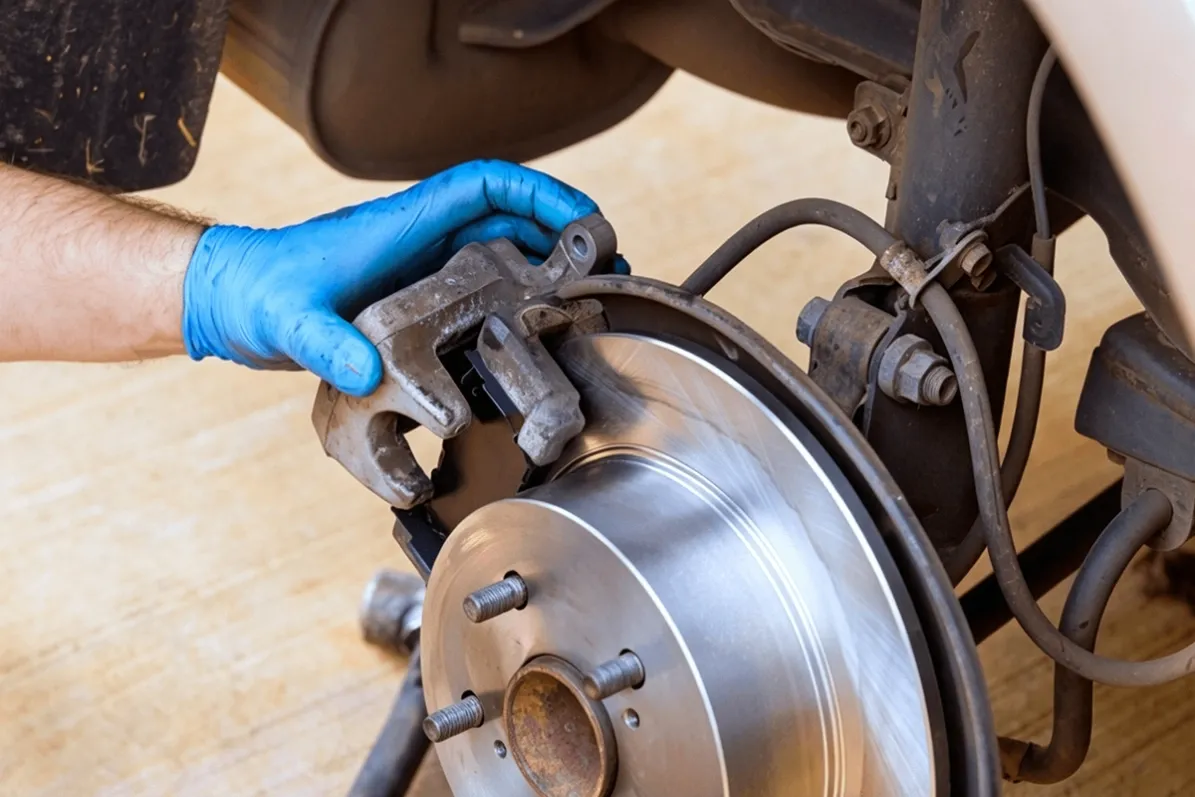
When replacing brake pads, do not simply install the new pads and close the wheel. Clean and inspect the caliper bracket, lubricate the correct sliding points with suitable brake grease, check the hardware, and measure the disc.
The replacement set should match the vehicle application and axle position. Depending on the design, it may include shims, wear indicators, clips, or other accessories. After installation, the technician should pump the pedal until it becomes firm and follow the correct bedding-in procedure.
Drivers should avoid emergency braking during the initial bedding period unless necessary for safety. If noise, pulling, vibration, or an abnormal pedal remains after installation, the vehicle needs another inspection.
Brake Disc Replacement: When It Is Necessary
Brake discs should be replaced when they are below the manufacturer’s minimum thickness, severely scored, cracked, excessively corroded, or affected by unacceptable thickness variation or runout. Resurfacing may be permitted for some vehicles, but only when the final disc remains above the safe minimum specification.
New discs should be installed with clean hub surfaces and correct wheel torque. Rust or debris between the hub and disc can create runout and lead to vibration complaints. For selection details, see our brake disc buyer’s guide.
Caliper and Brake Hose Inspection
A brake caliper that does not release correctly can cause overheating, uneven pad wear, noise, and premature disc damage. Inspect guide pins, boots, pistons, seals, and mounting hardware. A damaged rubber boot can allow water and dirt to enter the sliding mechanism.
Flexible brake hoses should be checked for cracking, swelling, twisting, abrasion, and leaks. A hose may look normal externally but still restrict fluid return internally. Any doubt should be handled by a qualified technician.
Severe-Service Conditions Need Shorter Intervals
Vehicles used in the following conditions may need more frequent checks:
- Heavy traffic with frequent braking
- Mountain roads or steep grades
- High temperatures or heavy vehicle loads
- Taxi, delivery, fleet, or towing operations
- Coastal areas with salt exposure
- Flooding, deep mud, or dusty roads
- Long periods of storage followed by intensive use
Fleet operators should track mileage, brake complaints, inspection results, and replacement dates for each vehicle. This data helps identify which applications consume parts fastest and improves inventory planning.
Maintenance Advice for Workshops and Distributors
Workshops should use a consistent inspection form and explain measurements to customers instead of relying on vague phrases such as “the brakes look bad.” Distributors can support workshops by supplying complete kits, accurate fitment data, and packaging that protects parts during storage.
A practical inventory should prioritize fast-moving pad and disc applications in the local vehicle fleet. Stocking every possible part number ties up cash, while stocking too few creates lost sales and urgent freight costs. Use workshop demand, vehicle parc data, and seasonal service patterns to refine the product range.
FAQ: Brake System Maintenance
How often should brake pads be inspected?
Inspect them during routine service and at least every 10,000–15,000 kilometers, with shorter intervals for city, mountain, fleet, or heavy-load driving.
Can new brake pads be installed on old brake discs?
Sometimes, but the disc must be within specification and free from severe scoring, cracks, excessive runout, or thickness variation. A measurement-based decision is safer than a visual guess.
Why does one brake pad wear faster than the other?
Uneven wear can be caused by a sticking caliper piston, seized guide pins, damaged hardware, hose restrictions, or an incorrect installation. The underlying cause should be repaired before fitting new pads.
Is brake fluid color enough to decide when to replace it?
No. Color can provide a clue, but it is not a reliable measurement of moisture content or boiling-point performance. Follow the vehicle manufacturer’s interval and use appropriate testing when needed.
Conclusion
A brake maintenance schedule does not need to be complicated. Check warning signs regularly, measure wear items during service, replace fluid according to the vehicle requirement, and investigate uneven wear instead of treating only the symptom.
For product buyers, the same principle applies: accurate specifications, reliable quality control, and complete installation hardware reduce downstream problems. You can learn more from our guide on how a car braking system works and our practical article on how to change brake pads.
YQFDG supplies brake pads, brake discs, and related components for international wholesale buyers. Contact our team for fitment data, product availability, and sourcing support.