
Aug 16, 2026Product Knowledge
7 Signs Your Brake Pads Need Replacing — Don't Ignore These Warnings
Learn the 7 warning signs that your brake pads need replacement. Squeaking, grinding, longer stopping distance — know when to change brake pads before it's too late.
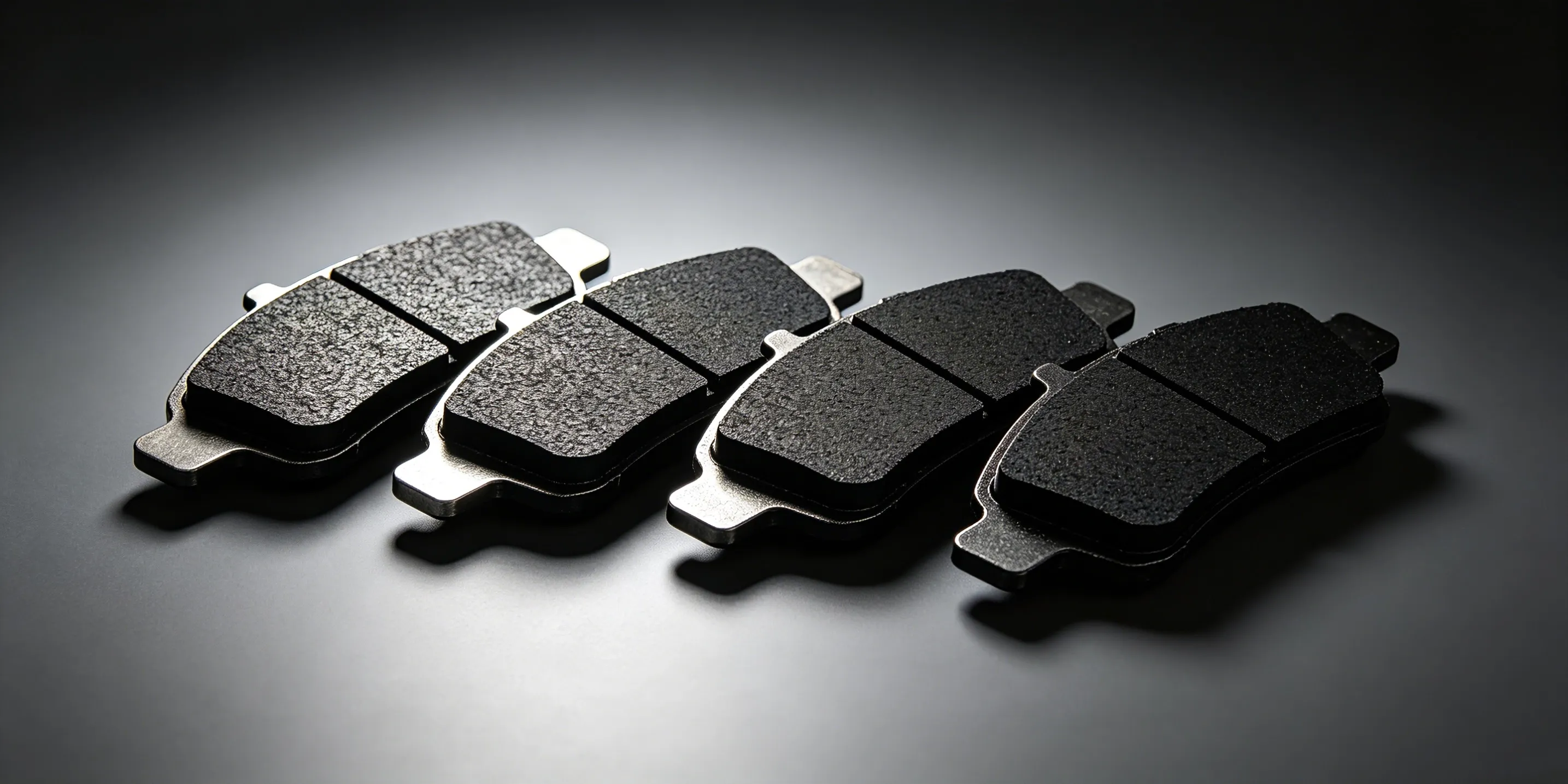
Your brakes are the most critical safety system on your vehicle. Yet many drivers — and even some mechanics — wait too long to replace worn brake pads, risking damage to expensive rotors and, more importantly, compromised safety.
Whether you're a car owner, a workshop mechanic, or an auto parts buyer serving customers in Africa, Southeast Asia, or other markets, knowing the warning signs of worn brake pads is essential.
Here are the 7 signs that tell you it's time for new brake pads.
1. Squeaking or Squealing Noise
The most common and earliest warning sign. When you hear a high-pitched squeal every time you press the brake pedal, your brake pads are likely wearing thin.
Why it happens: Most modern brake pads have a built-in wear indicator — a small metal tab that contacts the rotor when the pad material wears down to about 2-3mm. This creates the squealing sound as an early warning.
What to do: Don't ignore it. You typically have 1,000 to 3,000 km of driving left before the pads are completely worn. Schedule a replacement soon.
Popular replacements for common vehicles:
- Toyota Corolla / RAV4 → Brake Pad D1210 (front) / Brake Pad D1354 (rear)
- Honda CR-V / Civic → Brake Pad D1521 (front) / Brake Pad D1086 (rear)
- Volkswagen Jetta / Golf → Brake Pad D768 (front)
2. Grinding Noise When Braking
If you hear a loud grinding or growling sound, the situation is more urgent. This means the brake pad material is completely worn away, and the metal backing plate is grinding directly against the brake rotor.
Why it matters:
- Metal-on-metal contact damages the rotor, turning a pad replacement into a pad + rotor replacement — 3x to 5x the cost
- Braking performance is severely reduced
- Risk of brake failure increases significantly
What to do: Stop driving and replace brake pads immediately. Have the rotors inspected for damage.
Heavy-duty vehicles and SUVs wear pads faster due to their weight. If you drive a Toyota Prado, Land Cruiser, or Ford Everest, check your pads more frequently:
- Toyota Prado / Land Cruiser → Brake Pad D976 (front) / Brake Pad D606 (rear)
- Toyota Hilux / Fortuner → Brake Pad D436 (front)
3. Longer Stopping Distance
Notice your car taking longer to stop than usual? This is a subtle but dangerous sign of worn brake pads.
How to test: In a safe, empty area, brake from 60 km/h and notice how far you travel before stopping. Compare this to what you remember from when the pads were new. A significant increase means your pads are losing their friction material.
Why it's dangerous: In emergency situations, even a few extra meters of stopping distance can mean the difference between a safe stop and a collision. This is especially critical in markets with heavy traffic like Lagos, Bangkok, or Jakarta.
For popular fleet and taxi vehicles that see heavy daily use:
- Nissan Sylphy / Tiida → Brake Pad D1592 (front) / Brake Pad D905 (rear)
- Hyundai Elantra / Accent → Brake Pad D1593 (front) / Brake Pad D1157 (rear)
- Toyota Camry / Lexus ES → Brake Pad D1293 (front) / Brake Pad D1212 (rear)
4. Brake Warning Light on Dashboard
Many modern vehicles have a brake warning light or pad wear sensor that triggers a dashboard alert when pads reach a critical thickness.
Important: Different warning lights mean different things:
- Brake pad wear indicator — Pads need replacement soon
- Brake fluid warning — Could indicate worn pads (pistons extend further, fluid level drops) OR a fluid leak
- ABS warning — A different system issue; get it checked separately
What to do: If your brake warning light comes on, have the pads inspected within the next few days.
For vehicles with electronic brake wear sensors:
- BMW 3 Series / 5 Series → Brake Pad D1061 (front) / Brake Pad D1171 (rear)
- Mercedes-Benz C-Class / E-Class → Brake Pad D1837 (front) / Brake Pad D1341 (rear)
- Audi A4 / A6 → Brake Pad D1322 (front) / Brake Pad D1547 (rear)
5. Brake Pedal Feels Soft or Vibrates
A spongy, soft brake pedal or a pulsating/vibrating feeling when braking can indicate:
- Soft pedal: Air in the brake lines, brake fluid leak, or severely worn pads
- Vibration/pulsation: Warped rotors — often caused by overheating from worn pads, or uneven pad wear creating hot spots on the rotor
What to do: This is a safety-critical issue. Have your brakes inspected immediately.
Common vehicles prone to rotor warping in hot climates (Africa, Middle East, Southeast Asia):
- Ford Focus / Mondeo → Brake Pad D1044 (front) / Brake Pad D973 (rear)
- Mazda 3 / CX-5 → Brake Pad D1728 (front) / Brake Pad D1679 (rear)
6. Visibly Thin Brake Pads
You can often see your brake pads through the spokes of your wheel without removing the wheel. Look at the pad pressed against the rotor — there should be at least 3-4mm of friction material visible.
Visual inspection guide:
- 6mm+ — Good condition, no action needed
- 3-4mm — Plan replacement within the next few months
- 1-2mm — Replace immediately
-
Tip for parts buyers: When stocking inventory, focus on the most commonly replaced front pads. Front brake pads wear 2-3x faster than rear pads because the front brakes handle 60-70% of the braking force.
High-demand front pads to stock:
- D1210 — Toyota RAV4, Corolla, Levin
- D1521 — Honda CR-V, Haval H6, Changan CS75
- D768 — VW Jetta, Golf, Santana, Lavida
- D1760 — VW Passat, Tiguan, Magotan, Sagitar
- D1324 — Toyota Highlander, Alphard, Lexus RX
- D1375 — VW Tiguan, Passat, Audi Q3
7. Car Pulls to One Side When Braking
If your vehicle pulls left or right when you apply the brakes, it often means the brake pads are wearing unevenly — one side has more material than the other.
Possible causes:
- Uneven pad wear (one pad worn faster than the other)
- Stuck brake caliper on one side
- Contaminated brake fluid
- Collapsed brake hose
What to do: Have both sides inspected. Always replace brake pads in pairs (both front or both rear) to ensure balanced braking.
For vehicles with common caliper issues:
- Buick Excelle / Cruze → Brake Pad D1497 (front) / Brake Pad D1468 (rear)
- Chevrolet Malibu / Cruze → Brake Pad D1421 (front) / Brake Pad D1430 (rear)
When Should You Replace Brake Pads? A Quick Reference
Driving Condition | Recommended Replacement Interval |
|---|---|
City driving (heavy traffic) | Every 20,000 - 35,000 km |
Mixed city/highway | Every 35,000 - 55,000 km |
Highway dominant | Every 50,000 - 70,000 km |
Commercial/fleet vehicles | Every 15,000 - 25,000 km |
Mountain/hilly terrain | Every 25,000 - 40,000 km |
Pro tip for auto parts buyers: In African and Southeast Asian markets where city traffic is heavy and road conditions vary, recommend carbon ceramic brake pads to your customers. They last longer, produce less dust, and perform better in hot climates compared to semi-metallic or organic pads.
Why Choose Carbon Ceramic Brake Pads?
At YQF Auto Parts, we specialize in carbon ceramic brake pads that offer:
- ✅ Longer lifespan — 40,000 to 70,000 km average
- ✅ Low dust — Keeps wheels cleaner
- ✅ Quiet operation — No annoying squeal in normal use
- ✅ Consistent performance — Works well in both hot and wet conditions
- ✅ Rotor-friendly — Less wear on brake rotors, saving money long-term
- ✅ Wide coverage — Over 550 part numbers covering Toyota, Honda, VW, Hyundai, Nissan, Ford, BMW, Mercedes, Audi, and more
Conclusion
Don't wait for brake failure to replace your brake pads. The signs are clear — squeaking, grinding, longer stopping distance, warning lights, vibration, visible thinness, and pulling to one side all tell you it's time.
For car owners: Regular brake inspections every 10,000-15,000 km can catch problems early and save money on rotor replacements.
For auto parts buyers: Stock the high-demand part numbers mentioned above. Front pads sell faster than rear pads, and carbon ceramic material is increasingly preferred in tropical and developing markets.
Need help finding the right brake pad for your vehicle? Contact YQF Auto Parts — we'll match your vehicle to the correct part number and provide competitive factory-direct pricing.
YQF Auto Parts is a professional auto parts manufacturer and exporter based in Dongguan, China. We supply brake pads, filters, shock absorbers, spark plugs, and ignition coils to wholesale buyers across Africa, Southeast Asia, the Middle East, and South America.